I am a Software Development Engineer at Amazon Web Services and a Computer Science graduate from the University of British Columbia, as well as an ex-biomedical engineer.
During my free time I enjoy delving into technical hobbies to improve my abilities in software engineering and electronics, and I write about my academic adventures on my blog.
Outside of technical work, I enjoy hiking, snowboarding, surfing, and learning Mandarin.
Education
Bachelor of Computer Science
Integrated Computer Science
University of British Columbia
September 2023 - April 2026
Bachelor of Engineering in Biomedical Engineering
Electrical Engineering Focus
Minor in Chemistry
University of Victoria
September 2014 - April 2021
Experiences
Software Development Engineer Amazon Web Services
July 2026 - Present
Building and operating control plane and data plane services that handle automatic scaling for DynamoDB, Lambda, SageMaker, and other AWS services, as part of the Application Auto Scaling team on the EC2 Core Platform org.
CPSC 310 Teaching Assistant University of British Columbia
January 2026 - April 2026
Led weekly labs for the course's full-stack web application project, guiding students through design decisions and debugging implementation issues as they built out their systems
Evaluated student project submissions against course rubrics and invigilated exams to uphold academic standards
Served as a go-to resource on Piazza, answering student questions on core software engineering concepts covered in lecture
Software Development Engineer Intern Amazon Web Services
May 2025 - August 2025
June 2024 - September 2024
2025 Summer — Multi-Agent Ticket Resolution System
Developed a full-stack multi-agent AI system to help AWS operators efficiently resolve customer support tickets.
Built and integrated backend microservices using Python and AWS services to enable scalable, task-specific automation.
Designed intuitive user interfaces leveraging React and AWS Cloudscape to streamline the operator experience.
Integrated large language models (LLMs) to power intelligent agents capable of summarizing, classifying, and recommending solutions.
Improved ticket resolution efficiency by 50% by automating problem analysis and standard troubleshooting workflows.
2024 Summer — Resource Tag Management Feature
Pioneered the design and development of a AWS resource tags management feature for the AWS Billing Organization
Utilized AWS APIs, S3 buckets, Lambda functions, and other services for the development of the feature
Designed UI for the tools by leveraging React and AWS Cloudscape libraries
Investigated application of LLMs and Gen AI in powering tools to assist customers in managing AWS Resource tags
Deployed the feature, leading to a 5% reduction in billing data by helping customers reduce unnecessary resource tags
Controller/Simulator Team Lead UBCSailbot
September 2023 - April 2026
Team Lead — September 2025 to April 2026
Led the Controller/Simulator team through the critical integration phase of the Polaris project, coordinating the merging of individually developed subsystems into a single cohesive control stack ready for in-water testing
Directed in-water testing sessions, translating on-the-water results into actionable fixes and improvements for the team
Mentored new recruits joining the team, onboarding them onto the codebase and guiding their technical growth
Software Developer — September 2023 to August 2025
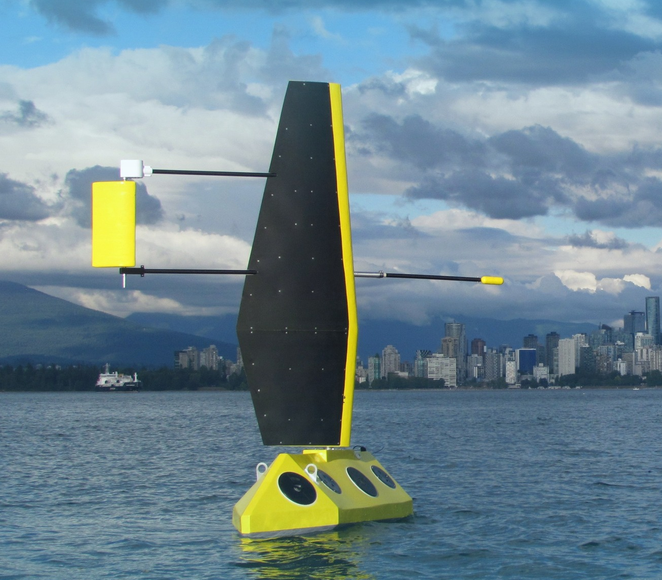
Spearheaded the design and implementation of mission-critical control software for an autonomous sailboat aimed
at collecting oceanic data to enable climate scientists to better understand our oceans and global warming
Decreased travel time of voyages by 20% by devising an efficient sail control algorithm that optimizes for speed
across various control states and sailing maneuvers
Software and Systems Risk Engineer Kardium Inc
May 2021 - July 2023
Co-op: September 2020 - April 2021
Authored and maintained device safety risk analysis documents for Globe® Pulsed Field System in order to
achieve FDA approval for clinical trials
Identified risks within software systems, devised risk control strategies, and confirmed all identified risks are
adequately addressed in order to minimize the possibility of severe patient harm from occurring
Advised various engineering teams on risks and mitigation to patient harm in design and testing
plans
Reduced hours-long tasks to a few minutes for the technical writing team by developing document processing
software in Java
Electrical Engineer UVic BMED Club
July 2019 - April 2020
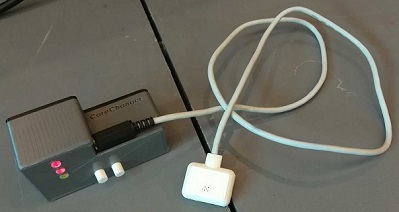
Contributed to project development for The Carechanger Platform
Assisted with schematic and PCB design using Altium Designer
Investigated electronic components needed for prototyping team projects
Designed and printed PCB enclosures using Solidworks and Ultimaker Cura
Microfluidics Research Student Elvira Research Group
May 2018 - August 2018
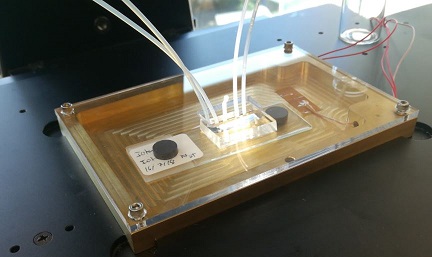
Worked closely with Katherine Elvira's research group on microfluidic research
Designed and constructed a heating platform for microfluidic chips using a PID temperature controller
Gained hands on experience in microfabrication of microfluidic devices
Investigated effects of heating on formation of droplet interface lipid bilayers
Electrochemical Chemist Co-op Harrington Research Group
May 2016 - Feb 2018
Worked closely with David Harrington's research group and presented weekly progress updates
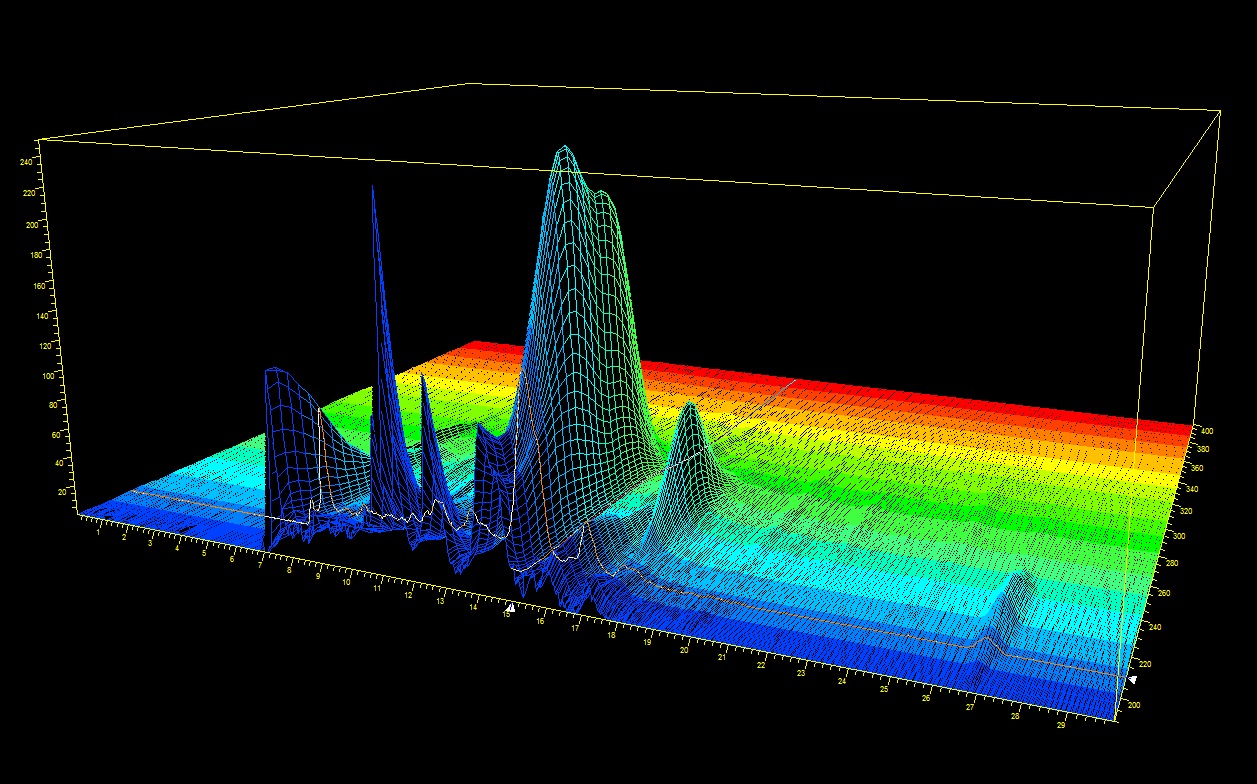
Investigated necessary methods and equipment needed for performing chemical analysis using high performance liquid chromatography
Developed an quantitative analytical method for determining organic compounds produced in electrochemical experiments
Designed and carried out electrochemical experiments on oxidation of glycerol into valuable organic products
Projects
Ferrite - Self-Hosted Music Streaming Service
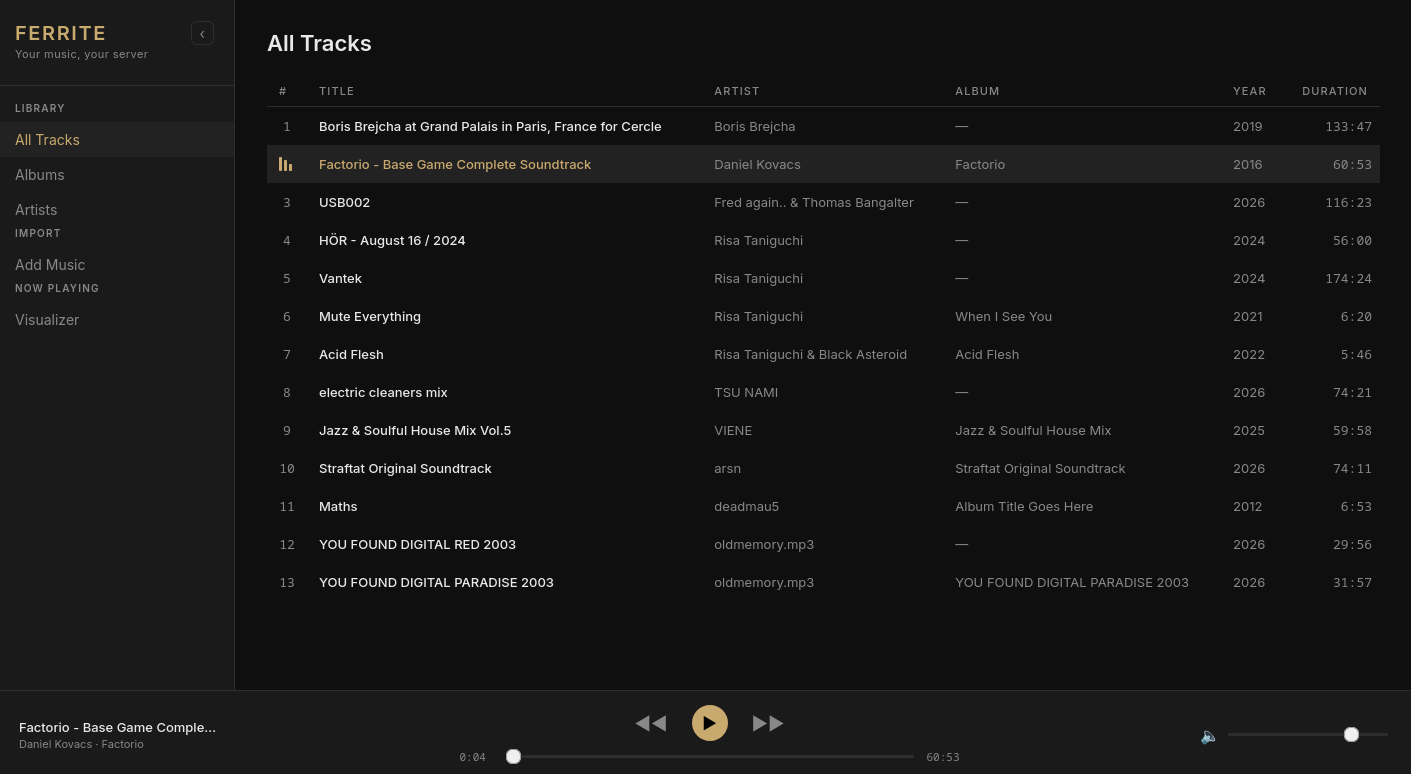
Ferrite is a self-hosted music streaming server I built in Rust with Axum that scans a music library, extracts metadata, and indexes everything into a SQLite database for fast queries, then streams audio on demand using HTTP range requests so seeking is instant and only the bytes being played are transferred.
It can also pull songs directly from YouTube via yt-dlp and uses AI to fill in missing metadata for imported tracks.
The service runs as an ARM64 Docker container on a Raspberry Pi, deployed automatically by a GitHub Actions pipeline that cross-compiles and pushes a new image on every push to main.
I made Ferrite publicly accessible using DuckDNS for a stable domain over a home connection with a changing IP, Nginx as a reverse proxy with Let's Encrypt HTTPS certificates, and Cloudflare Turnstile gating requests behind a bot check.
Bloom
Bloom is an AI-powered caretaker platform I built for elderly users to help address the global aging crisis, where healthcare systems are increasingly unable to keep pace and 75% of dementia cases go undiagnosed until months of cognitive decline have already passed.
The platform's voice-first assistant handles conversational requests like booking rides or checking appointments by automating tasks across pharmacy, insurance, and healthcare websites using Browserbase Stagehand and Claude.
A cognitive monitoring system analyzes speech patterns during calls for early warning signs of decline, giving caretakers clinical summaries, trend reports, and doctor-exportable data, along with clinically-backed cognitive exercises.
Bloom also provides proactive companionship through personalized weekly reports featuring reminiscence therapy and family highlights, and a real-time health dashboard powered by WHOOP wearable data.
The project was built using React Native, Next.js, FastAPI, MongoDB, and Claude, and was awarded 1st Place in the Human Flourishing Track and Best Conversational Assistant at TreeHacks 2026.
FreeRTOS Real-Time Scheduler Extensions
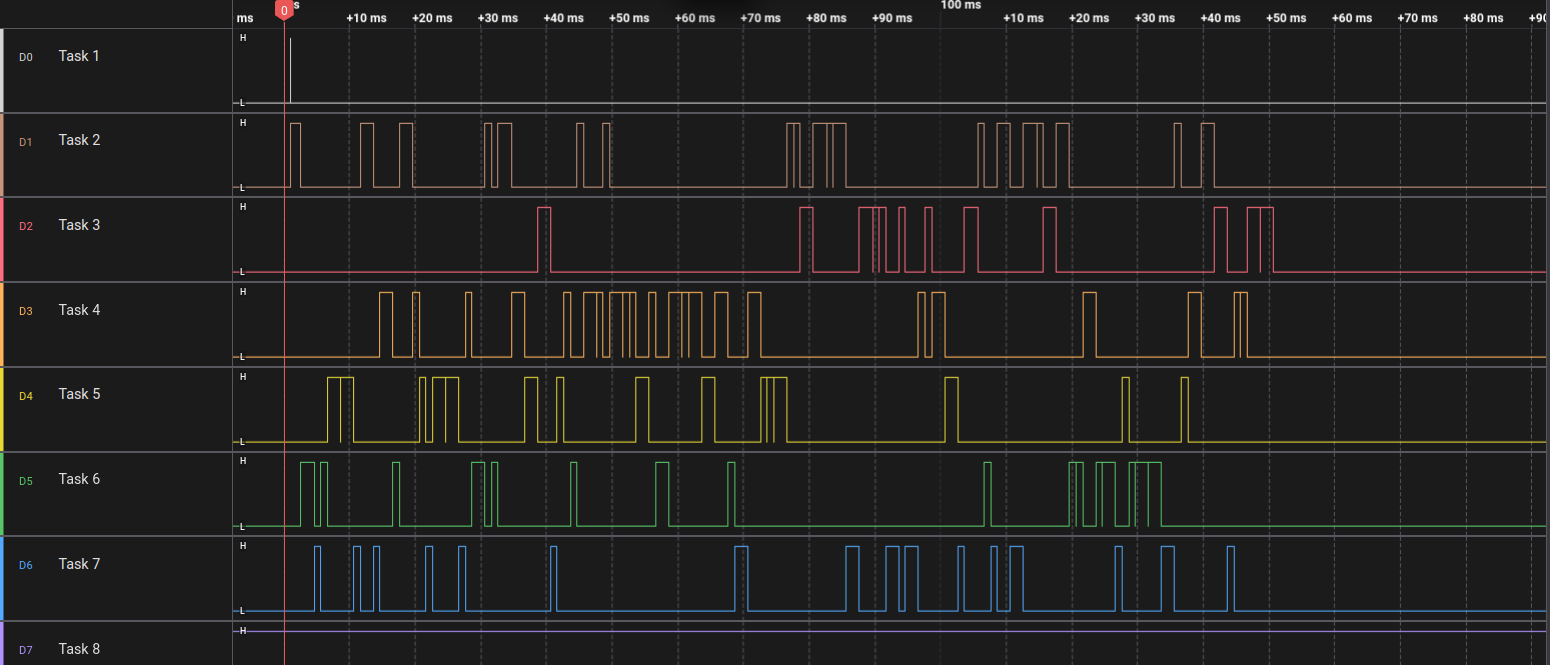
Extended the FreeRTOS kernel to support real-time scheduling on a Raspberry Pi Pico (RP2040), replacing the default priority-based scheduler with an Earliest Deadline First (EDF) scheduler backed by a globally sorted ready list, exact processor-demand admission control, and configurable deadline-miss handling.
Added the Stack Resource Policy (SRP) on top of EDF to provide bounded-blocking resource sharing for binary semaphores through ceiling-based preemption tests, along with run-time stack sharing between tasks at the same preemption level.
Implemented a Constant Bandwidth Server (CBS) to service aperiodic, soft real-time requests alongside hard real-time periodic tasks, isolating aperiodic execution through a dynamic virtual deadline that postpones itself whenever a server's CPU budget is exhausted.
Extended the scheduler across both cores of the RP2040 with Global EDF, using a single shared ready list with job migration and core-affinity support, and Partitioned EDF, using independent per-core ready lists and admission tests, selectable at compile time.
Shutter Quest
Shutter Quest is a multiplayer scavenger hunt game I built for nwHacks 2026 that bridges digital connection with physical engagement, challenging friends to look up from their screens and explore the world around them.
Players receive AI-generated prompts ranging from direct to cryptic and compete to photograph real-world items matching the description, while an AI system called the Oracle evaluates submissions using computer vision for accuracy and speed.
A real-time competitive leaderboard ranks players by "Divine Confidence" (the AI's certainty in a match) and "Temporal Speed" (how quickly the submission was made).
The game was built using Next.js, Flask, OpenAI CLIP hosted on a local homelab server, and Supabase.
Microservice Latency Optimization Research
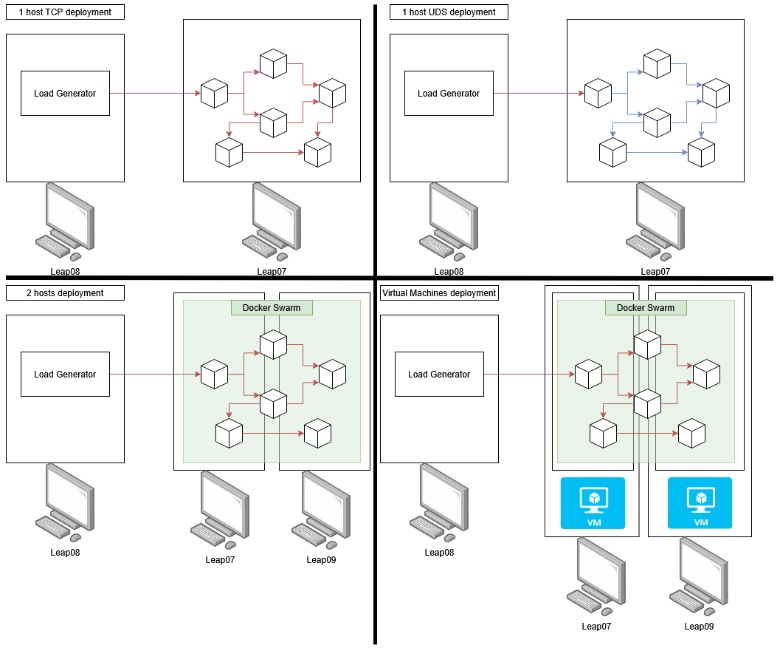
Investigated communication overheads in microservice architectures, benchmarking TCP against Unix Domain Sockets across single-host, distributed, and virtualized deployments using Jaeger distributed tracing.
Showed TCP inflates p99 tail latency by up to 350% over UDS for intra-host calls, and designed a hybrid UDS/TCP model cutting p99 latency 8% in distributed deployments.
Transparent Media
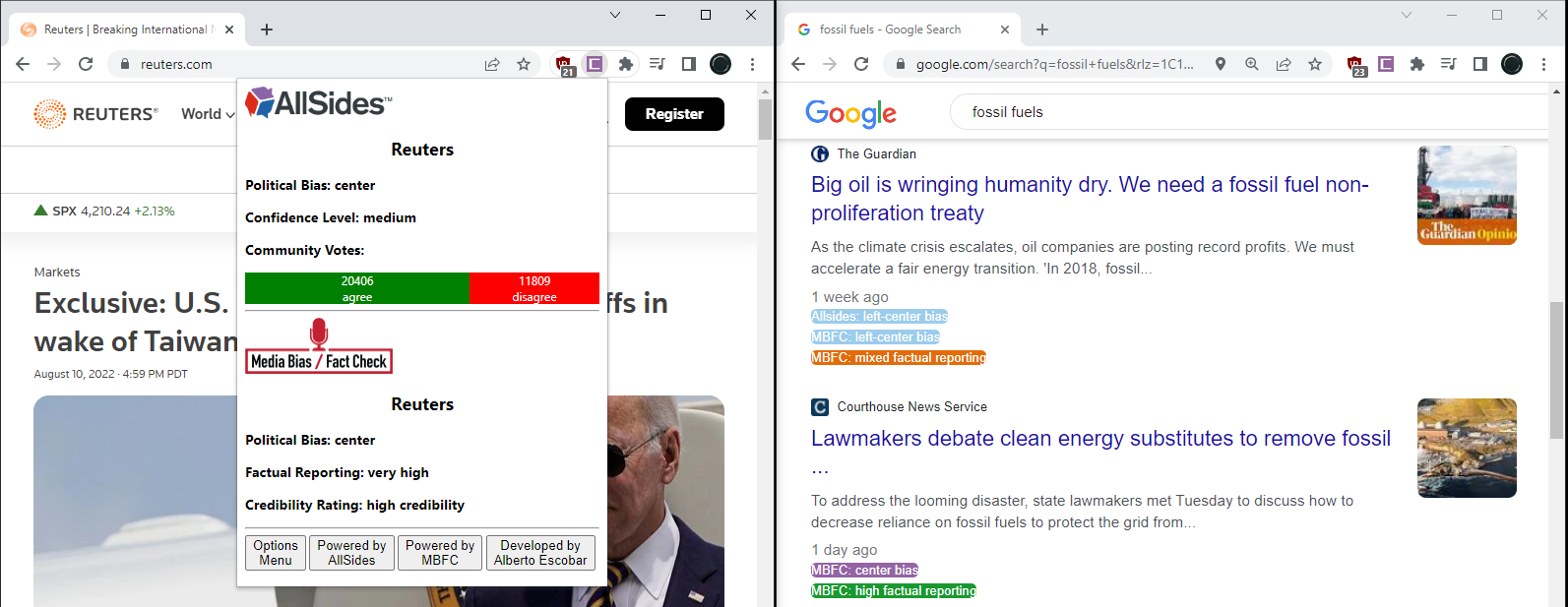
Transparent Media is a chrome extension that I developed that provides information to the user about the political bias reporting accuracy of the news site they are viewing.
Currently the extension can provide this information in the form of a popup window when viewing an article or news site.
The extension also adds stickers and tooltips indicating political bias to any news site present on a Google search result. These features can be disabled in the settings/options menu.
The extension retrieves data from an API I also developed and deployed that is a web scraping service written specifically for scrapping data from
www.allsides.com and mediabiasfactcheck.com.
The API will periodically scrap the data and store it on a PostgreSQL database to ensure the data persists when the API service is idle during times of no use.
Currently this extension is in testing phase but there is hope to upload the extension to the Chrome store for public use once the extension has finished testing.
CipherPad
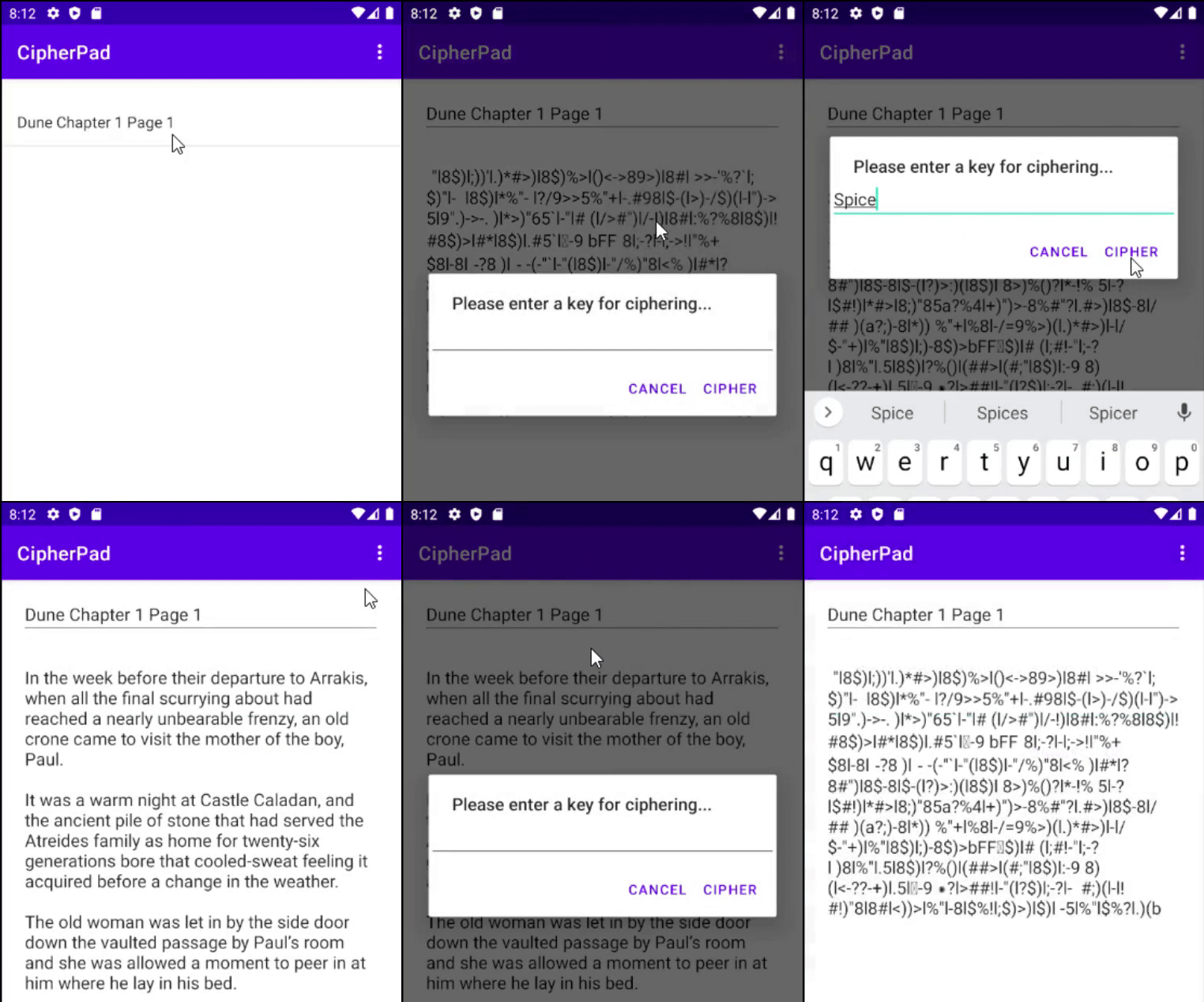
CipherPad is notepad app with the ability to encrypt text with a personalized key and share encrypted content over messaging or file sharing services.
Other users who receive encrypted content can use the app to decrypt and read the content with the correct key.
CipherPad provides an effective means for someone to secure the contents of private notes and share encrypted versions of the note to others.
This project was developed using Java, SQLite, and the android dev environment for IDEA.
An APK of the first release of the application is available for download at the download icon below.
Automatic Sorting System
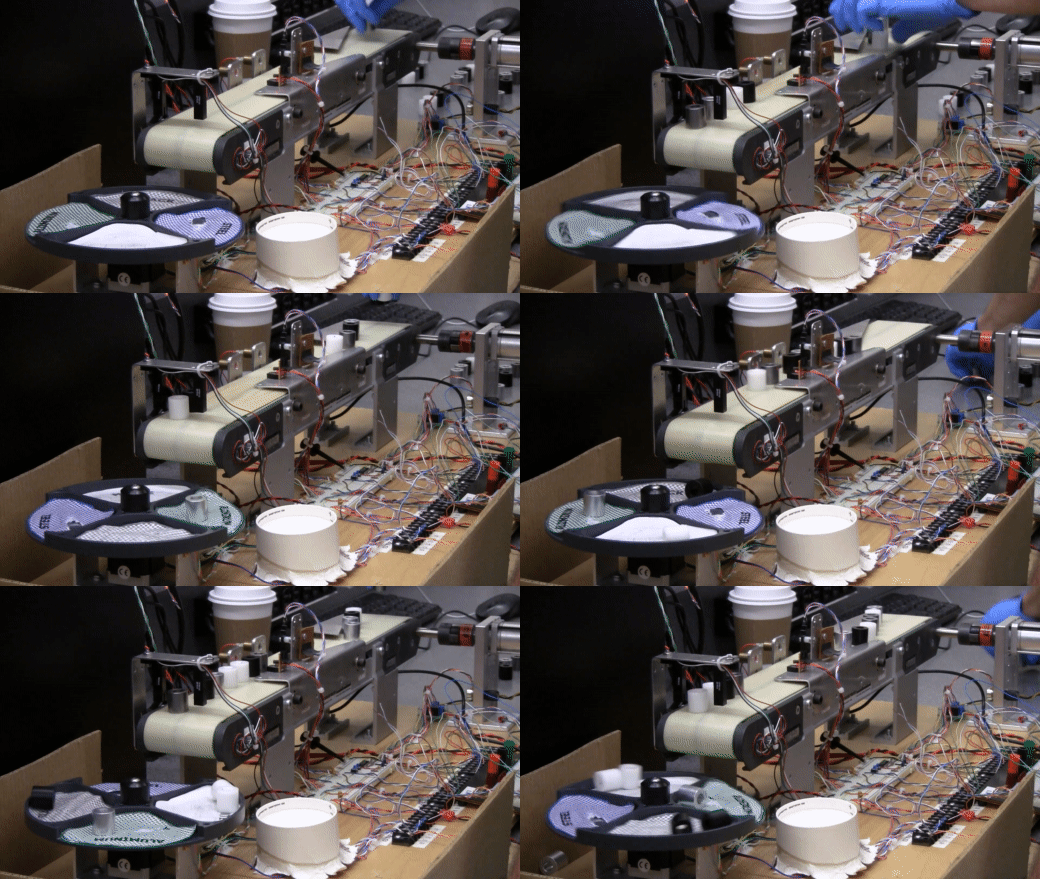
The Automatic Sorting System was the final project assigned for the mechatronics course (MECH458) offered at the University of Victoria.
The goal of the project was to design and program a system that can successfully sort 48 objects into 4 different categories in under 60 seconds.
The objects were made from one of the following materials: black plastic, white plastic, aluminum, or steel.
These objects were categorized based on the material the system detected they were made of.
The system consisted of a conveyor belt with laser trip sensors and an IR reflectance sensor, a rotating sorting tray, and an Atmel 8-bit microcontroller (AT90USB1287).
The final demo of the project successfully sorted 48 pieces in 38 seconds with 4 errors made.
Detection of Melanoma Symptoms Using Neural Networks
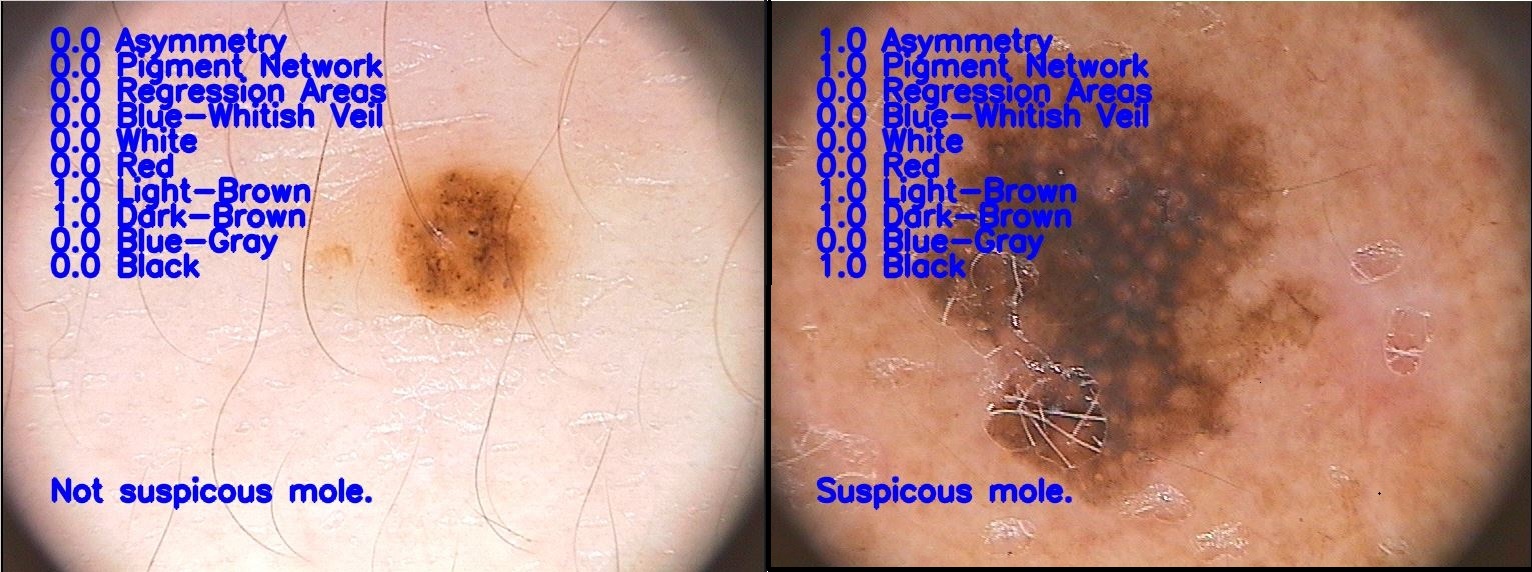
Melanoma is a dangerous form of skin cancer that is often hard to diagnose early due to its similar looking nature to benign moles.
For this project a convolution neural network was developed and trained to help identify suspicious moles that may have melanoma.
The model outputs 10 labels which indicate the presence of asymmetry, pigmentation network, regression areas, blue-whitish veil, and 6 colors.
The structure of the convolution neural network was optimized to determine a configuration that yielded the most suitable results.
The final model configuration consists of 3 convolution layers that have max pooling layers sandwiched in between, this is followed by 3 dense layers.
The training of the model used the PH2 data set which consists of 200 dermoscopic photos of moles along with description and diagnosis given by a dermatologist.
A modified version of the data set was created by performing horizontal and vertical reflections to produce a data set for validation.
Statistical analysis was performed on the model to determine accuracy and reliability of the label classification of the neural network.