Alberto Escobar
CHIN 133 Final Project
Self Introduction
Learning Reflection
Since my midterm learning reflection, I’ve made a couple of changes that have genuinely helped my progress.The first is that I’ve started practicing conversation more with my girlfriend. Having a regular, I’m more willing to try out new vocabulary and grammar patterns in the moment instead of rehearsing them silently in my head. The second change is I’ve been watching English-speaking influencers do motorcycle vlogs while they traveling across China. When they attempt Mandarin, I find myself catching errors in their pronunciation or grammar and mentally correcting them. This has turned out to be a surprisingly effective study method, it forces me to actively notice tones, vocabulary, and grammar rather than just passively listening. Together, these two activities have built up my confidence speaking out loud and improving my understanding of grammar and vocabulary.
I think the organization of this course is logical and practical. The narrations follow a group of friends doing everyday activities (e.g. going to a cafe, shopping for clothes, asking for directions) and each of these is something I would actually need to do if I visited China. This structure has also shaped how I approach self-study. For example, if I wanted to be able to handle interactions at a Chinese bar, I’d sit down and learn the vocabulary and grammar for ordering different types and sizes of drinks, paying, and making small talk. In a way I would build my own lesson around a situation I want to be ready for.
In CHIN 131 and 133, I’ve especially enjoyed is the handwriting practice. I find doing the character exercises genuinely relaxing. It is very meditative following stroke order and maintaining the focus it requires. Going forward, I plan to keep learning new characters and practicing writing from memory as part of my routine.
Cultural Reflection
Whether I split the bill or not depends on the situation. Lately, I’ve been splitting the bill with most of my friend groups, regardless of their cultural backgroun. However, if a friend has recently done me a favor (e.g. helped me with homework, bought me a concert ticket, picked me up from the airport) I’ll usually treat them to a meal as a way of saying thanks. In Chinese culture, splitting the bill isn’t as common, and people often end up competing to pay. I haven’t really experienced this in Canada, but I have a vivid memory of it happening in China. I went out with a couple of chinese friends. While we were trying to pay, the waiter was attempting to scan someone’s payment QR code, but we were all covering each other’s phones with our hands so that the waiter would have to scan ours instead. It was funny in the moment, but it also showed me how much treating others is tied to showing care and respect in Chinese culture.
In class we learned that in Chinese culture, red symbolizes good luck and happiness, while green can carry negative associations. In Canadian culture, red is also viewed positively, as it is one of the main colors of the Canadian flag. In my home country of Chile, yellow is considered a lucky color to wear, especially around New Year’s Eve. Interestingly, I personally don’t like how yellow looks on me, so I tend to avoid wearing it. Comparing these three, it’s interesting that every culture seems to have a lucky color, but which color that is and how it’s worn can be completely different.
Besides Lunar New Year, the Chinese holidays I’m most familiar with are the Mid-Autumn Festival and Qixi Festival, both of which I celebrate with my girlfriend. Mid-Autumn is a chance to eat mooncakes and appreciate the moon with family, while Qixi is the Chinese equivalent of Valentine’s Day. From my own culture, the main holidays I celebrate are Christmas and New Year’s. One thing I’ve really enjoyed about celebrating Chinese holidays with my girlfriend is that there are more of them spread throughout the year, which gives us more excuses to go out, cook special dishes, or host a feast with friends. It’s made me appreciate how holidays aren’t just about tradition, but a habit of bringing people together, and the Chinese holidays offers a lot of those moments.
Character Exploration: 油
Character and Pinyin
油 (yóu)
Meaning
Oil, fat, grease (nouns); to oil, to grease (verb); oily, greasy (adjective)
Structure
The left side is 氵which is a radical for 水 (water). The right side is 由 which is the phonetic component.
Context
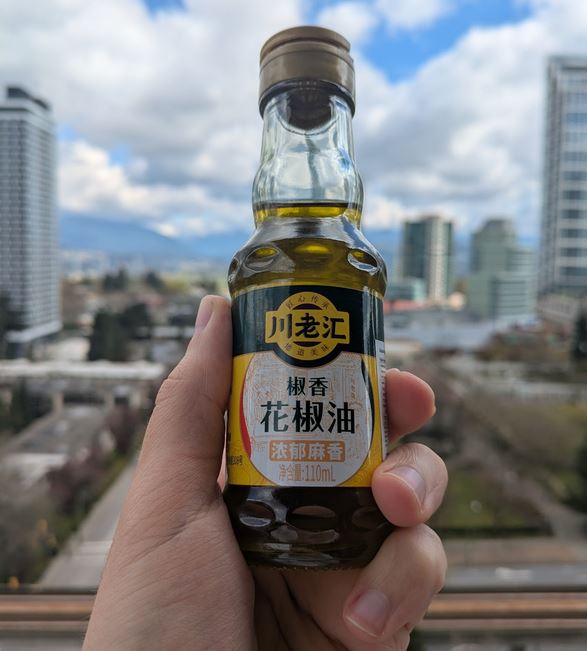
This is a bottle of sichuan peppercorn oil from my pantry.
Personal Importance
Sichuan peppercorn is a flavor close to my heart. It was the first flavor that stood out to me when I was taken to am excellent Chinese restaurant several years ago, and it was that meal that made me fall in love with the cuisine. Since that dinner, I have learned how to cook several Chinese dishes and regularly use sichuan peppercorn oil in my cooking. My recommendation is to use it as a finishing/seasoning oil for spicy dishes. I also enjoy adding some to my dipping sauce whenever I make dumplings.
Cultural Background
Sichuan peppercorn oil is made from sichuan peppercorns, which are a unique variety of peppercorn that was first grown in the sichuan region of china. The unique characteristic of this peppercorn is that it provides a tingling numbing sensation on your lips and tongue, known as 麻 (má). This sensation is often paired with spicy seasonings to create Mala (麻辣 málà), meaning “numbing-spicy,” which is a signature flavor of sichuan cuisine. Sichuan peppercorns have a long history in chinese cuisine, dating back over 2000 years, and were used in ancient times as a fragrance and a medicine before becoming a cooking staple.
Character Exploration: 抄
Character and Pinyin
抄 (chāo)
Meaning
to fold, to copy, to transcribe, to seize, to attack
Structure
On the left side is a 扌which is the radical for 手 (hand). On the right side is 少 which stands for few.
Context
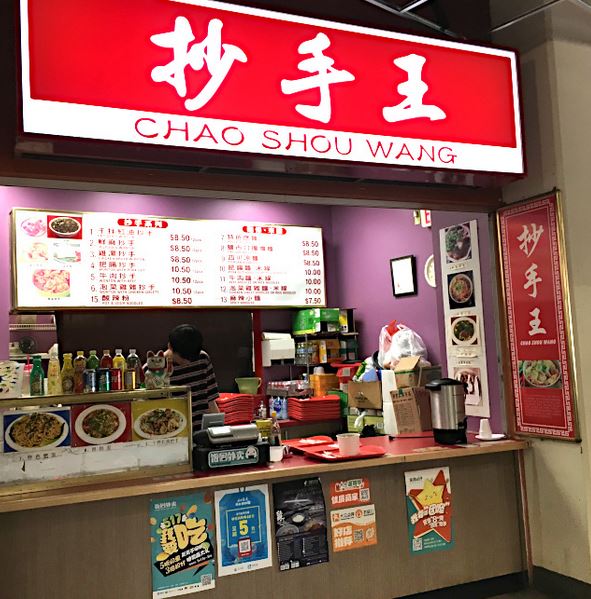
This is a picture of the Chao Shou Wang food stall in Crystal Mall.
Personal Importance
This is one of my favorite food stalls at Crystal Mall. Their specialty dish is wontons. They offer them either in dry form (served topped with chili oil and peanuts) or in soup form (served in a spicy beef broth with braised meats). I recommend this place to anyone who visits Crystal Mall as it is one of the best food stalls there, and you cannot beat paying ~$11 for 12 delicious wontons. Their name is 抄手王, which translates literally to “Wonton King.”
Cultural Background
抄手 is the Sichuan dialect word for wontons. I remember the meaning as 抄 means “to fold” and 手 means “hand,” which is how you make wontons, by folding filling in a wrapper with your hands. The standard Mandarin word for wontons is 馄饨 (húntun), however in China different regions have their own dialect words for them. For example, in Cantonese they are called 云吞 (wántān), which is actually where the English word “wonton” comes from. Sichuan-style wontons are distinct from other regional styles because they are typically served in a spicy chili oil sauce or a numbing, peppery broth, rather than the lighter clear broth more common in Cantonese cooking. The owners of this particular food stall in Crystal Mall are from the Sichuan region, which explains why they use the Sichuan name 抄手 for wontons and why the style they are served in is from Sichuan.