Alberto Escobar
CHIN 131 Final Project
Self Introduction
Learning Reflection
Looking back on the beginning of this term, I’m proud of how much progress I’ve made in Chinese. When the course started, my ability was very limited. I could introduce myself and say basic information like where I was from, but my listening, reading, and typing were extremely weak. I could barely recognize characters, and conversations felt overwhelming. Now, at the end of the term, I feel that I can operate at a solid introductory level across all four skills. I can read short passages with understanding, follow simple dialogues, and participate more confidently in everyday conversations. Celebrating this growth feels meaningful because I can really see how much more comfortable I am using the language.
One of the biggest changes is how much more I can express about myself. Earlier in the term, I could only say simple facts, but now I can talk about my studies, interests, schedule, opinions, and even personal preferences like what I like to eat or drink. I’ve also learned how to ask other people about themselves, which makes interactions feel more natural. A small but memorable moment was in late November when I had a short conversation with my new landlord, who speaks very little English and is from China. We chatted in Chinese about where she is from and what I am doing right now. That conversation really showed me how much my Chinese had improved.
I can now discuss many topics: self-introductions, family, studies, daily activities, ordering food and drinks, schedules, and making simple plans. I can ask and answer questions within these topics using learned patterns and vocabulary. I also feel more capable of putting sentences together accurately because I have a better sense of basic Chinese word order.
Another highlight of this term was learning Chinese characters. At first, they felt intimidating, but now I find them fascinating. Each character has a structure and a story that helps me remember its meaning. Being able to identify components and understand how characters are formed has made learning them much more enjoyable.
Reflecting on the broader course objectives, I think the two most important goals for me at the beginning of the semester were to improve my knowledge and skills in Chinese. In particular, I wanted to improve my pronunciation, vocabulary, and sentence patterns. I knew that if I could not pronounce words clearly or make basic sentences correctly, communication would be difficult. Over the semester, I’ve really improved in these areas. I still need more practice with tones and pinyin, but compared to early September, my pronunciation is much more accurate and understandable.
As for interdisciplinary competence, I developed study strategies that I know I will use long-term. Flashcards helped me retain vocabulary and pinyin, and writing my own example sentences helped me test whether I truly understood a grammar pattern. Reviewing my sentences with my girlfriend kept me motivated and ensured I learned correctly. These strategies reminded me that language learning requires consistency, creativity, and patience.
Overall, I feel that I’ve achieved many of the course objectives and built a strong foundation in Chinese. I can now communicate basic ideas, understand simple texts, talk about my daily life, and engage in beginner-level interactions. Looking ahead, I want to keep improving my reading fluency and expand my ability to express more complex thoughts. I’m proud of how far I’ve come this term, and I’m excited to continue learning Chinese beyond this course.
Cultural Reflection
Throughout this term, our discussions on cultural topics helped me reflect more deeply on my interactions with people from Chinese-speaking backgrounds. One moment that stayed with me was when 杨老师 explained why in China, they use the terms 上课 and 下课 to describe starting and ending class. The idea that education is viewed as a form of “ascending” or receiving enlightenment helped me appreciate how highly education is valued in Chinese culture. This contrasts with what I often see among my Canadian peers, where education may not always be perceived as a privilege, but rather as something routine. Learning the cultural meaning behind these phrases allowed me to better understand the attitudes and motivations Chinese students may bring into University.
In my own experiences working with Chinese international classmates, I have found them to be very respectful, hardworking, and committed to their studies. Understanding the cultural emphasis on education helped me appreciate why they care deeply about the quality of their work and their academic experience. I also noticed cultural traditions that added warmth to our group environments. Many of my Chinese classmates enjoy celebrating the end of term with food, which I personally appreciate as well. These small cultural exchanges made our interactions feel more personal and helped build connections beyond academic tasks.
Overall, my learning from this course has given me new tools to strengthen my interactions with Chinese-speaking peers. Even being able to use a little Chinese in casual conversation shows openness and respect, and I hope it helps my Chinese colleagues feel that their culture is welcomed and valued here in Canada. I plan to continue applying what I have learned about cultural similarities and differences. Not only with Chinese classmates, but with people from all cultural backgrounds. This awareness will help me build more inclusive, thoughtful, and meaningful relationships both inside and outside the classroom.
Character Exploration: 富
Character and Pinyin
富 (fù)
Meaning
Rich, wealthy, abundant, ample
Structure
This character is made up of the radical 宀 (roof) and the component 畐 (abundance). 畐 contains two parts: 口 (mouth) and 田 (field). Together, 富 creates the image of having abundant food and resources under one roof, which conveys the idea of wealth.
Location
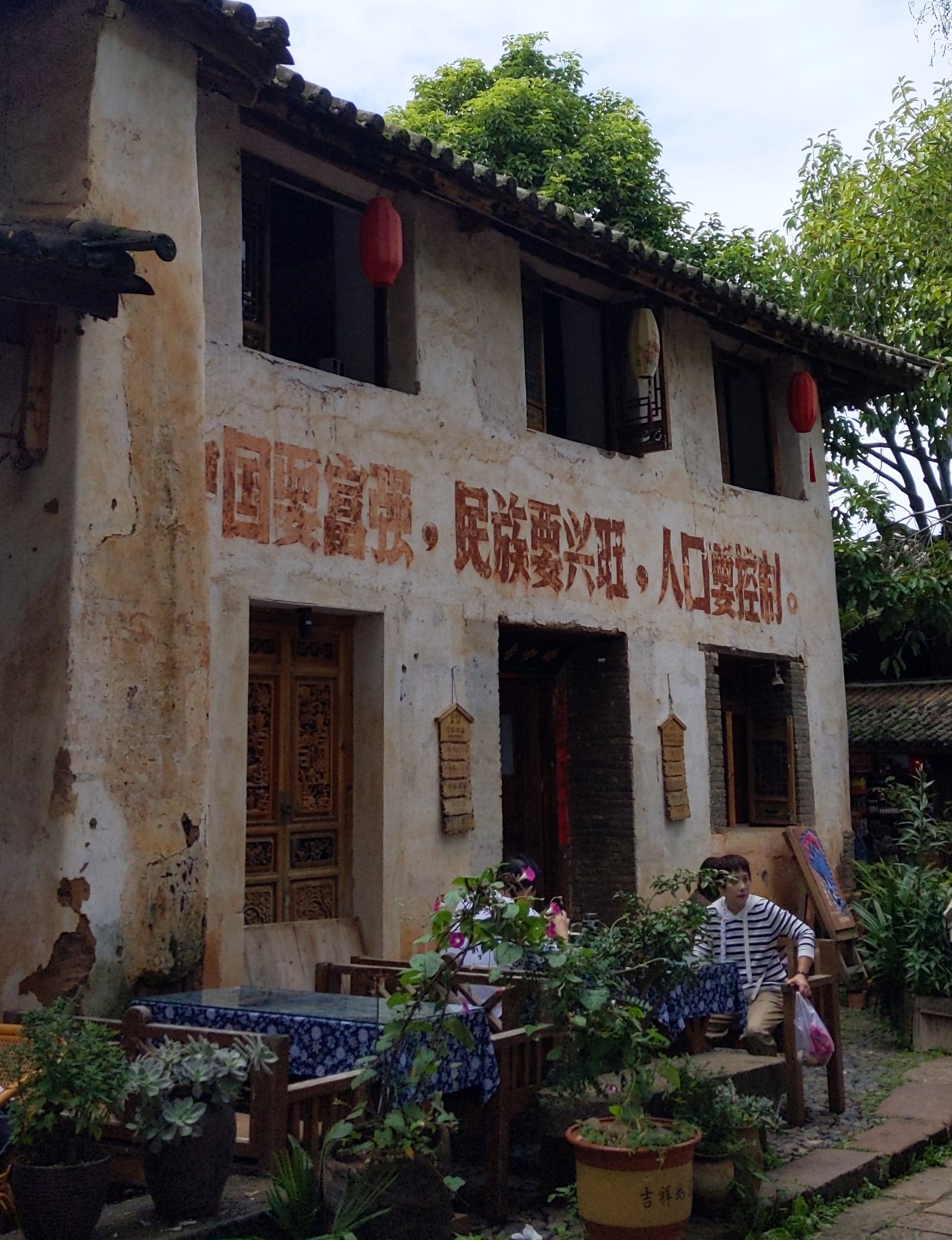
I took this picture while traveling in China, in the town of Shaxi in Yunnan province.
Personal Importance
When I visited Shaxi, I thought the town was beautiful. As I walked past this slogan on a wall, I asked my girlfriend about it. She explained both the meaning of the text and how slogans like this were used before the One-Child Policy was introduced. I found it fascinating, because it felt like a relic from a different era. One when China was dealing with very different social challenges and used public messaging to guide people’s behavior before implementing major policies.
Cultural Background
The full slogan painted on the wall is:
“中国要富强,民族要兴旺,人口要控制。”
Zhōngguó yào fùqiáng, mínzú yào xīngwàng, rénkǒu yào kòngzhì.
which translates to:
“China must become rich and strong, the nation must prosper, and the population must be controlled.”
These kinds of slogans were extremely common across China during the mid to late 20th century. They were used to encourage families to stop having too many children as the government became concerned about population growth. Many of these slogans appeared before the formal introduction of the One-Child Policy, making them a snapshot of the government’s messaging strategy at the time.
Character Exploration: 喜

Character and Pinyin
喜 (xǐ)
Meaning
Happy, joyful, like; happiness, joy
Structure
The radical here is 口 (mouth), which appears at the bottom of the character. The top component is 壴, which historically represents a drum. When combining a drum and a mouth, I imagine drumming and cheering during a celebration, which helps me remember why 喜 means “happy” or “joyful.”
Location
This signage comes from the store Hey Tea 喜茶. The image I used is from their New York City storefront, but there are also locations near where I live, such as in Richmond and Burnaby.
Personal Importance
This character is meaningful to me because it appears in 喜茶, the Chinese name for Hey Tea, a brand I personally love. The literal meaning of 喜茶 is “joyful tea”, which perfectly describes how their drinks make me feel.
The radical 口 also appears in many characters I learned throughout the semester, such as:
- 喝 (hē) — to drink
- 叫 (jiào) — to call
- 唱 (chàng) — to sing
Cultural Background
Hey Tea is extremely popular in China with over 4,000 stores, and its expansion into places like Canada, Singapore, and Australia shows how Chinese beverage culture has become a global trend.
Character Exploration: 包
Character and Pinyin
包 (bāo)
Meaning
To wrap; bag; bundle
Structure
This character has the radical 勹 (to wrap) and the component 巳 (historically this has meant snake). Putting them together, the character 包 visually suggests something being wrapped or a wrapped item.
Location
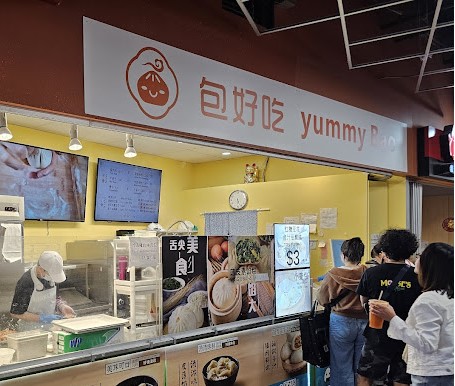
This picture is of the 包好吃 Yummy Bao store at Crystal Mall in Burnaby. This store opened up within the alst 12 months and they make really good steams buns!
Personal Importance
I walked past this store recently and I could easily read this character on the sign. I also really love steamed buns and when I ordered them I thought that the name of the store is very fitting for how good they were. 包好吃 literally means “the buns taste good,” which matched my experience when I tried them.
Cultural Background
The character 包 shows up in iconic foods in Chinese cuisine. 包子 (steamed buns) are comforting, affordable, and something many people grow up eating the. They are commonly eaten for breakfast, as a quick snack, or as a side dish for lunch or dinner.
Also 包 (bāo) sounds very similar to 保 (bǎo), which means “to guarantee” or “to ensure.” Because of this, 包好吃 can also sound like 保好吃, meaning “guaranteed delicious.” It gives the store name a fun double meaning.
Crystal Mall itself is a cultural hub in Burnaby. Walking through it feels like stepping into a little slice of East Asia. You’ll see food and grocery stalls with handwritten signs, vendors chatting in Mandarin or Cantonese, and lots of traditional foods you won’t find in other malls. Crystal Mall reminds me how language and food travel with people and help keep cultural traditions alive in Vancouver.